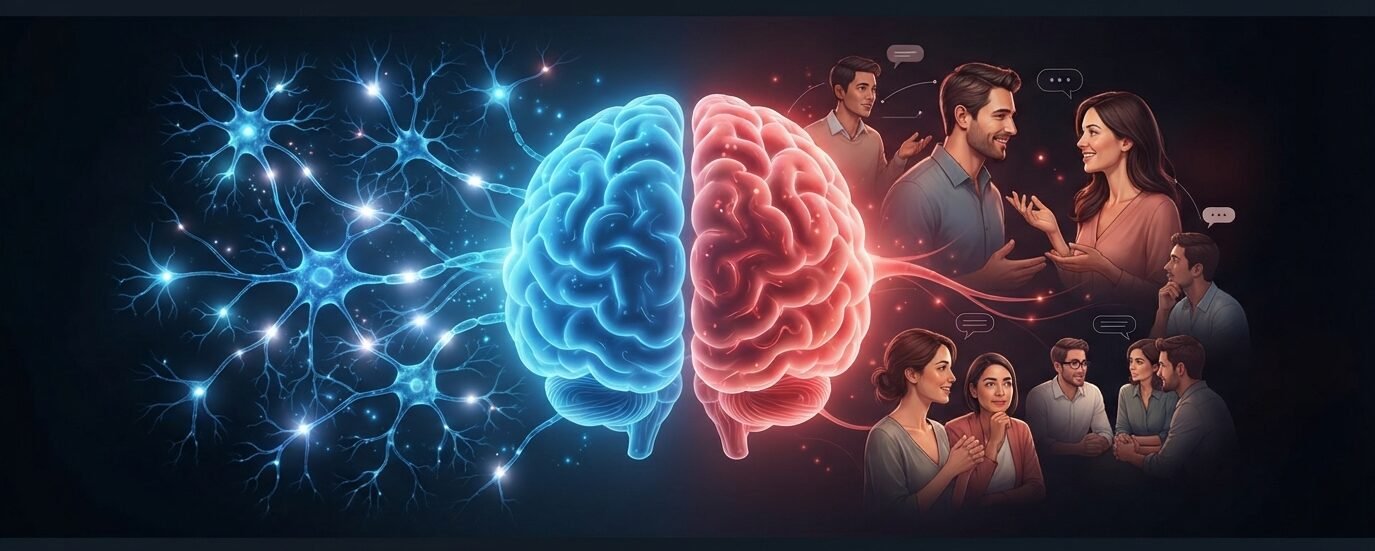
Why Do We Procrastinate? The Psychology Behind Procrastination
- Procrastination is often linked to emotional regulation, not simply laziness.
- Our brains tend to prefer immediate relief over future rewards.
- Executive function and attention influence our ability to start tasks.
- Understanding the reasons behind procrastination can help us change the behavior.

You know that thing you have been meaning to do for days?
The email you need to answer. The project you need to start. The book you want to read. The workout you promised yourself you would do.
You know it matters. You know you will feel better once it is done. And yet, somehow, you find yourself checking your phone, making coffee, organizing your desk, watching one more video, or suddenly deciding that this is the perfect moment to clean the kitchen.
Then comes that familiar feeling: Why am I procrastinating again?
Procrastination is one of those human behaviors that seems simple from the outside but becomes surprisingly complicated when we look at what is happening underneath.
If you have ever wondered why we procrastinate, the answer is not simply that we are lazy, undisciplined, or bad at managing time.
In many situations, procrastination has much more to do with emotion, motivation, attention, self-regulation, and the way we respond to discomfort.
And understanding that changes the conversation completely.
What Is Procrastination?
Procrastination is the voluntary delay of an intended task, even when we know that postponing it may create problems later.
That last part is important.
If you decide to postpone doing something because a genuine emergency came up, that is not necessarily procrastination. Procrastination involves a conflict between what you intend to do and what you actually do.
You intend to start the report. You don’t. You intend to study. You scroll through your phone instead. You intend to exercise.
Suddenly, tomorrow sounds like a much better day to begin.
This is why procrastination is so interesting from a human behavior perspective. We often know what we should do, we know what the consequences of delaying it may be, and we still choose something else.
So what exactly is going on?
Why Do We Procrastinate?
One of the most useful ways to understand procrastination is to stop looking at it as a simple time-management problem.
Sometimes, the task itself is not the real problem. How the task makes us feel may be the problem.
A difficult project can create uncertainty. A large task can create overwhelm. A boring task can create low motivation. A task connected to possible failure can create anxiety or self-doubt.
And a task that offers a reward only in the future may seem much less attractive than something that provides immediate stimulation.
This creates a fascinating behavioral conflict: the task may be important, but avoiding the discomfort associated with the task can feel rewarding right now.
That is one of the central ideas behind understanding the psychology of procrastination.
Procrastination and Emotional Regulation
We often think of procrastination as a failure of discipline.
But imagine that you have an important task in front of you and immediately experience discomfort.
You don’t want to feel confused. You don’t want to feel bored. You don’t want to risk doing something badly. You don’t want to discover that the task is harder than you expected.
So you postpone it.
For a few minutes, you feel better. That temporary relief matters. The brain has learned something:
Avoiding the task reduced the uncomfortable feeling. And behaviors that reduce discomfort can become surprisingly persistent.
This is why procrastination can become a cycle.
You avoid the task → you feel temporary relief → the task remains unfinished → pressure increases → discomfort returns → you avoid it again. The problem is no longer simply “I didn’t manage my time.” It becomes a behavioral loop. And once you see the loop, procrastination starts to make much more sense.
Immediate Rewards vs. Future Rewards
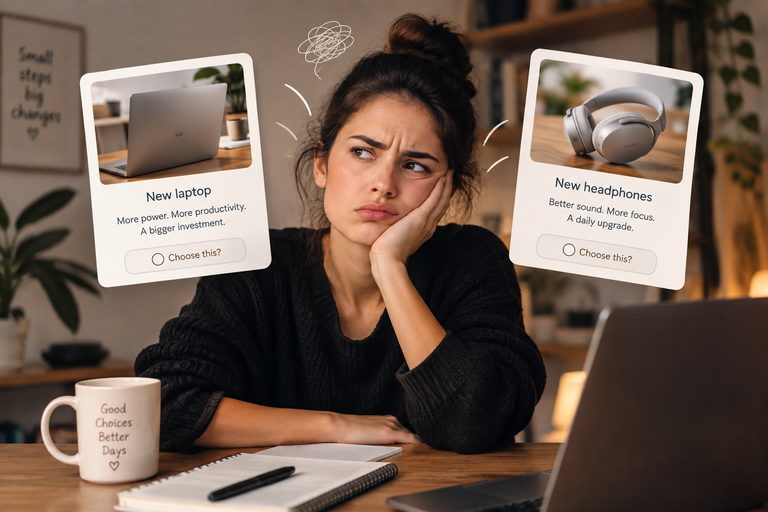
Another important part of procrastination involves the difference between immediate and delayed rewards. Imagine two options.
Option A: Spend the next hour working on something difficult that will benefit you next month.
Option B: Watch videos, scroll social media, check messages, or do something entertaining right now.
The second option offers an immediate reward. The first offers a delayed one.

This matters because human behavior is strongly influenced by what is happening in the present moment. We can intellectually understand that a future benefit is important and still be strongly attracted to something that feels rewarding now.
This helps explain why procrastination and social media often become connected. Digital environments are exceptionally good at providing immediate stimulation. There is always another notification, another video, another post, another piece of information.
Meanwhile, the important task sitting on your desk is quietly waiting for you to invest effort before it gives anything back. That is not exactly a fair competition.
Why Do We Procrastinate Even When We Know Better?
This is perhaps the most frustrating part. You already know procrastination is causing problems. You have probably promised yourself that you will stop procrastinating. You may even have created a detailed plan. And yet, you do it again. Why?
Because knowledge and behavior are not the same thing. Knowing what you should do does not automatically determine what you will do.
Human behavior is influenced by context, habits, emotions, attention, expectations, rewards, and previous experiences. This is why simply telling yourself to “be more disciplined” often produces disappointing results.
You are trying to change a behavior without understanding the system maintaining it.
A more useful question is: What happens immediately before I procrastinate?
Are you overwhelmed? Bored? Uncertain about how to begin? Afraid that your work will not be good enough? Distracted? Tired? Looking for something more stimulating?
The answer may reveal much more than simply labeling yourself a procrastinator.
Procrastination and Perfectionism
There is another interesting relationship worth considering: procrastination and perfectionism.
At first, they may seem like opposites. A perfectionist wants to do things exceptionally well. A procrastinator avoids doing them. But sometimes those two behaviors can coexist.
If the standard you have created for yourself is extremely high, starting a task can feel threatening. You are not simply writing an article. You are trying to write the perfect article. You are not simply starting a project.
You are imagining everything that could go wrong.
The larger the perceived gap between what you can produce now and what you believe you should produce, the harder it can become to begin. And this is where procrastination can become particularly sneaky.
You tell yourself: “I’ll start when I have more time.”
“I’ll do it properly tomorrow.”
“I need to research a little more first.”
Sometimes those statements are reasonable. Sometimes they are simply more sophisticated forms of avoidance.
The Problem With Calling Yourself Lazy
Calling yourself lazy may feel like an explanation, but usually it is not a very useful one. “I’m lazy” describes the behavior without explaining it.
It does not tell you whether the problem is lack of clarity, low motivation, emotional discomfort, distraction, unrealistic expectations, habit, or difficulty regulating attention.
And if you believe that laziness is your identity, you may start behaving accordingly. Instead of asking: “What’s wrong with me?”
try asking: “What is making this task difficult to start?”
That question opens a door. Maybe the task is too vague. Maybe it is too large. Maybe the first step is unclear. Maybe the reward is too far away. Maybe your environment is full of distractions. Maybe you have associated the task with discomfort for so long that avoiding it has become automatic.
Those are behavioral problems. And behavioral problems can be examined and changed.
Why Starting Is Often Harder Than Continuing
Have you ever postponed something for hours, finally started, and then thought: “This wasn’t even that bad.”
Exactly. One of the strange characteristics of procrastination is that the anticipation of a task can sometimes be more uncomfortable than the task itself. Before starting, your brain has to deal with uncertainty.
How difficult will this be? How long will it take? Will I do it well? What if I get stuck?
Once you begin, some of that uncertainty disappears. The task becomes concrete. You have a first sentence. A first paragraph. A first page. A first step. This is why breaking a large task into smaller actions can be so useful. It changes the psychological experience of beginning. Instead of: “I need to finish this project.” you have: “I need to open the document and write the first paragraph.” The second instruction requires much less mental negotiation.
Procrastination Is Not the Same as Rest
There is also an important distinction between procrastination and intentional rest.
Rest is not a failure.

Taking a break because you are tired, spending time with people you love, going for a walk, reading something enjoyable, or simply doing nothing for a while can be perfectly healthy parts of life.
The difference is often intentionality. When you rest intentionally, you know why you are resting.
When you procrastinate, you often use another activity to escape something you intended to do, while knowing that the unfinished task is still waiting. That distinction matters because the goal should not be to turn human beings into productivity machines. The goal is to understand our behavior well enough to make better choices.
How to Stop Procrastinating
Understanding why we procrastinate is only the beginning. The next step is learning how to interrupt the cycle.
And the answer is usually not “try harder.” Start by making the task specific. Instead of “work on my project,” define exactly what the next action is.

Instead of “study,” decide what you will study and for how long. Instead of “write,” open the document and write one paragraph.
You can also reduce unnecessary friction. Put your phone somewhere else. Close unnecessary tabs. Prepare the materials you need before beginning. Make the desired behavior easier to start and the distracting behavior slightly harder to access.
And most importantly, stop waiting to feel ready. Motivation is not always the starting point. Sometimes action creates motivation.
You begin with a small action, experience progress, and that progress changes how the task feels. The first step does not need to be impressive.
It simply needs to exist.
Ready to Take the Next Step?
Understanding why we procrastinate is an important first step. But understanding a behavior and actually changing it are two different things.
That’s why I created a practical guide designed to help you move from intention to action.
Inside, you’ll find simple, easy-to-implement routines that you can follow over 21 days to build greater consistency, reduce procrastination, and begin changing the habits that may be keeping you stuck.
You don’t need a perfect plan or a dramatic transformation overnight. Sometimes meaningful change begins with small actions repeated consistently.
Continue Reading
👉 Why Do We Procrastinate Even When We Know Better?
Understanding the gap between knowing what we should do and actually doing it.

2 Comentários